Showing posts with label science. Show all posts

Wednesday, July 29, 2015

Diseases with an upside!

Diseases with an upside.
By Rich Feldenberg


Since life’s earliest emergence on planet earth, disease has been our constant and unwelcome companion.  Even the first single celled organisms were susceptible to break down, nutritional deficiencies, and harmful genetic mutation.  When single celled life upgraded to the multicellular stage, finally becoming large, it was then susceptible to a host of new disorders, such as cancer that interfered with the organization and growth of cells that now had to survive as part of a collective.  Humankind is no different than the rest of the animal kingdom in this regard, and throughout human existence disease has lead to untold suffering, death, and at times the threat of total extinction.  It may therefore be surprising to learn that some diseases confer protection against other types of illness, and this seems to account for the high prevalence of some of these disorders in the human population.  If the protective benefit of the disease mutation on a large portion of the population outweighs the suffering and death of a small portion of the population, natural selection will swing the balance in favor of keeping those mutations in the gene pool.  Not only may the disease mutation simply persist in the gene pool, but it may become very prevalent because it is selected for in the right environment, where the other illness it protects against is a major threat.   To illustrate how this works I’ll give some detail on two well known examples of diseases and their upside - in other words, how they protect against other threats to our species.

The first example is that Sickle Cell Anemia (SCA), which has the best documented evidence as to its evolutionary risk versus benefit ratio in its effected population.  Sickle Cell Anemia is a genetic disease that causes anemia (low red blood cell counts), and can lead to painful, and potentially deadly pain crises.  It is inherited as an autosomal recessive trait - meaning that if you receive one copy of the mutated gene from each of your parents, then you have two abnormal copies of the gene (are homozygous, in the language of genetics) and will have the disease.  Each of your parents, however, has only one mutant copy and also one normal copy (is heterozygous), and so is only a carrier (has sickle cell trait) and will not show symptoms of the disease under normal circumstances.  

SCA is due to a single base switch in the DNA that codes for the beta-chain of the hemoglobin molecule.  Adult hemoglobin is made of two alpha chains and two beta chains.  This is the major oxygen carrying protein in the blood, although, there are other versions of hemoglobin that are produced (one example is fetal hemoglobin with two alpha chains and two gamma chains).    In SCA, there is a substitution of the amino acid glutamic acid for valine at the 6th amino acid in the beta chain.  Since valine is more hydrophobic than glutamic acid this has the unfortunate consequence of causing the hemoglobin molecules to polymerized and compact together, deforming the shape of the red blood cells (RBCs) that carry them, into a sickle shape - hence the name Sickle Cell Anemia.  The polymerization event is more likely to happen if the affected individual is dehydrated, in a low oxygen state (hypoxic), or otherwise ill with another illness.  The deformed red blood cells can not get through the tiny capillaries very well, causing blockages that deprive tissues of blood and oxygen.   The result is pain and organ damage.  


Over time, people with SCA damage their spleen so badly that they lose the its important immune function, which normally you against encapsulated bacterial infections.  These are certain bacteria that are surrounded by a polysaccaride capsule, that helps them to escape detection by the immune system.  Someone without a functioning spleen can then die of these types of infections, whereas those with normal spleens would be able to fight off the infection easily.  The blockages to blood flow due the abnormal sickle shaped RBCs can lead to strokes and to Acute Chest Syndrome.  If people with SCA become infected with the common virus Parvovirus B19, they can develop severe life threatening anemia, with hemoglobin levels that get so low they can develop heart failure.  

Sickle cell anemia is common in sub-Saharan Africa, and about 300,000 are born with disease each year.  All the complications of SCA listed above can be fatal so why would this disorder have such a high prevalence?  The answer seems to be that although people with full blown Sickle Cell Anemia are at a most definite disadvantage from a survival aspect, those who are carriers of SCA are protected against another common killer - Malaria.  Malaria is an infectious disease caused by the protozoan Plasmodium.  It has a complex life cycle, part of which is spent inside the mosquito Anopheles, and part is spent inside a vertebrate host - such as a human.  When an infected female mosquito bites a human, the organism is transmitted into the persons blood stream where it travels to the liver, infects liver cells, reproduces, and then is released back to the bloodstream where it infects RBCs.  The symptoms of Malaria include fever, vomiting, joint and muscle pain, headache, and in some cases seizures.  As the Plasmodium organism goes through its life-cycle within the host, from liver to RBC and back again (these are known as the liver phase and the erythrocytic phase respectively), the symptoms return in a cyclical fashion.  In some cases the organism passes through the blood-brain barrier leading to Cerebral Malaria, which is a very serious complication.  Malaria has a high mortality rate if untreated - as would have been the case before the age of modern medicine.


It was observed, early on, that in regions endemic to malaria, people who were carriers of the sickle cell mutation showed resistance to the malaria infection, and that full blown SCA has a high prevalence in those same regions where malaria is endemic.  Further studies confirmed that those individuals who are carries for the sickle cell mutation, do in fact, enjoy a protection due to their gene mutation.  Unfortunately, those with actual sickle cell anemia (homozygous for the gene mutation) are not protected against malaria.  Not only do they have to suffer the fate of SCA, but if they get malaria they have a worse prognosis because the malaria damages their already vulnerable RBCs.  


For a long time it was thought that sickle cell trait most likely confers its malarial protection by making it difficult for Plasmodium organisms to infect the abnormally shaped RBCs, and that the abnormal RBCs are removed more readily by circulating macrophages, helping to rid Plasmodium infected cells more readily.  More recent research seems to suggest that the protective mechanism is more complex that that, and involves the up regulation of an enzyme called heme oxygenase-1(HO-1).    HO-1 causes the breakdown of heme, and the release of carbon monoxide (CO), iron, and biliverdin, resulting in an anti-inflammatory effect.  HO-1 is upregulated or produced to a greater extent in RBCs that have the abnormal hemoglobin associated with SCA, and it is the production of CO that seems to have a detrimental effect for the Plasmodium organisms.  It confers protection against cerebral malaria, and decreased mortality for those with sickle cell trait who become infected with malaria.  This might also be the answer to why several other diseases or disease traits have also been observed to offer protection against malaria, such as thalassemia trait and Glucose-6-Phosphate Deficiency.  These disorders might also increase the activity of HO-1.  

We’ll move now to another deadly disease that seems to have remained in the population because it offered a survival advantage.  This is the kidney disease called Focal Segmental Glomulosclerosis (a real mouthful) or just plain old FSGS for short.  FSGS can be caused by chronic infections, such as hepatitis or HIV, but many cases are due to a genetic mutation.  It is a subset of the genetic form that may have been selected for to protect against Sleeping Sickness.  In FSGS the tiny filters in the kidneys, called glomeruli, become scarred until they can no longer filter.  This can eventually progress to kidney failure and the need for dialysis or kidney transplant.  Kidney failure is fatal without modern medical care and FSGS is one of the more common causes for young people to be on dialysis.  Its also, often more common and resistant to therapy in African Americans and other people of African descent. 

Some people with the genetic form of FSGS have a mutation in a gene called APOL1, and if you are an individual with two mutated copies of the APOL1 gene, your risk of developing FSGS and kidney failure is 17 times higher than if you have two normal copies of the gene.  That adds up to around a 4% chance of developing FSGS over your lifetime if you are homozygous for mutant APOL1.  This mutation is also thought to explain 18% of all cases of FSGS that currently exist.  There are two types of mutations in the APOL1 gene that can increase risk for FSGS kidney disease.  These is the G1 variant, which contains two amino acid substitutions - one is a replacement of glycine for serine at amino acid 342 in the protein (S342G), and the other switch is a replacement of methionine for isoleucine at amino acid 384 in the protein (I384M).  You have to have both of these switches you have the G1 variant.  The other variant is the G2 variant where 6 base pairs are deleted in the DNA coding for APOL1 starting at base 388.  People can have either a G1 variant or a G2 variant, but never have both types.  

APOL1 is a protein that circulates in the blood and is part of the high-density lipoprotein (HDL - otherwise known as the “good” cholesterol).  Exactly how the mutated form of APOL1 causes kidney disease is still not known.  What is known, however, is that those individuals with either a G1 or G2 specific gene mutation in APOL1 have protection against African Sleeping Sickness, caused by the protozoan Trypanosoma brucei.  This tiny single celled eukaryotic organism is transmitted to its human host by the bite of the tsetse fly.  It is a common and dangerous disease in sub-Saharan Africa.  In 1990 it caused 34,000 deaths, but the death rate dropped to 9000 in 2010, thanks to efforts of the World Health Organization to prevent and treat the infection.
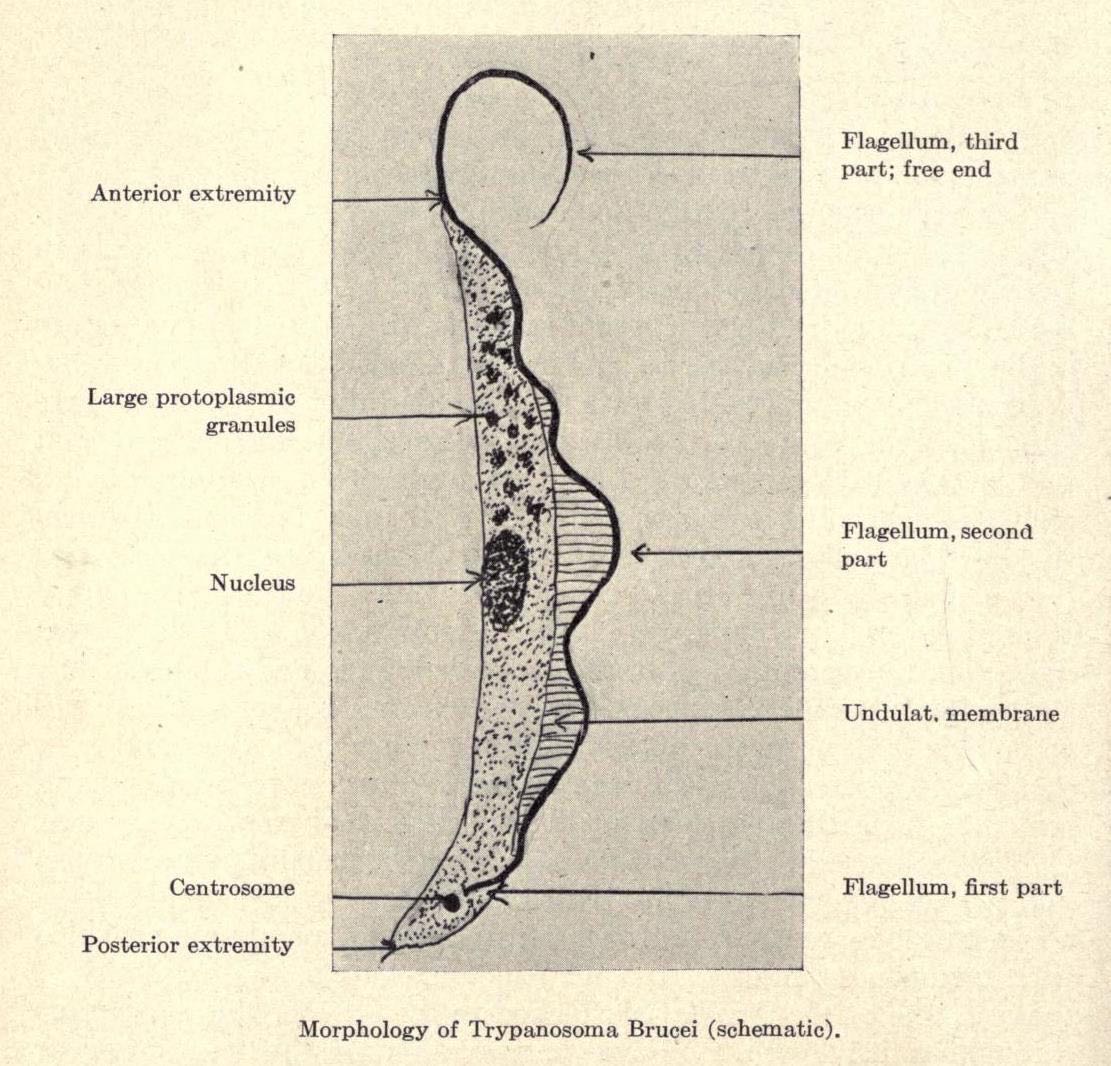


Those affected by the parasite experience two distinct stages of infection.  In the first stage the victim develops headaches, fever, and severe itching.  This resolves only to eventually progress to the second stage of the disease which effects the central nervous system causing confusion, paralysis, neuromuscular weakness, and sometimes psychiatric illness.  There is a reversal of the sleep-wake cycle, giving the disorder its common name.  Infected persons often sleep in the day and remain awake at night.  Without treatment the disease always ends in the death of its victim.   It can be treated with the drug pentamidine, when in the first stage, or drugs such as eflornithine or melarsoprol for second stage disease.  


Like the association of Sickle Cell Anemia and malaria, those geographic regions with a high incidence of sleeping sickness also have a high incidence in the population of APOL1 G1 or G2 variants.  This is because those gene variants protect against the ravages of the Trypanosomes.  The APOL1 variants cause the lysis (breaking apart of the cell membrane) of Trypanosomes that cause sleeping sickness.  The normal gene for APOL1 gives us resistance to other species of Trypanosomes that do infect other mammals, but are unable to harm us.  The sleeping sickness Trypanosome (Trypanosome brucei rhodesiense) is immune to the normal APOL1 since it has evolved a serum resistance-associated protein (SRA) that blocks a portion of the APOL1 protein, neutralizing its anti-trypanosomal action.  Not so for the APOL1 variants G1 or G2, however.  They are able to get around this SRA and destroy the parasite.  From an evolutionary point of view, the advantage of being more resistant to sleeping sickness in an area of high risk, outweighs the cost of having a higher than average chance of kidney disease.  There is no advantage, however, to having these variants if your ancestors originated where sleeping sickness is not a problem, so other populations aren’t found to have these gene mutations.

The two examples of Sickle Cell anemia and Focal Segmental Glomerulosclerosis (APOL1 mutation) are not the only situations where a disease mutation protect us against another illness.   I’ll just briefly mention two more.  Tay-Sachs disease, which is a lethal neurodegenerative disorder in the homozygous state, seems to protect against Tuberculosis in carriers (heterozygotes).   Also Cystic Fibrosis (CF) which usually leads to severe and chronic lung disease in the homozygous state, may have protected against the effects of cholera in the heterozygous carriers.  The CF mutation inactivates a chloride channel called CFTR, in the cell membrane.  Being a carrier for this mutation may have prevented the lethal dysentery that would have accompanied infectious cholera, by preventing water loss in the intestines due to poorly working chloride channels.  It is a very common gene mutation, with 1 in 25 people of European descent being a carrier for the CF gene mutation.  

When we think disease we think of the suffering of its victims and the cost to society.  We are often unaware of the balance of the many forces involved, which influence why a particular disease may be so common in a given population.  The factors involved are typically much more complex than we appreciate, and most of them are still unknown to us.  Natural selection is working behind the scenes in ways that are difficult to detect on just a casual examination.  It may be of no consolation to the sufferers of a serious disease, or the family members devastated by a loved ones sickness and loss, but natural selection, with its cold blind eye to pain or suffering, seems to have fixed some of this in place to allow more genes to be passed onto future generations.  Evolution is not directed toward any particular goal and has no empathy or sense of compassion.  It only selects those traits that happen to give the organism the best chance to pass on its genes in its evolved environment.  This is where the human mind comes into play.  Now that we are finally learning to understand the root causes of disease at the genetic and molecular level, we can work to treat, cure, and eradicate disease.  Although we are not there yet, in theory it should be possible to cure a condition like sickle cell anemia with gene therapy.  At the same time, we shouldn’t have to worry about worsening the burden of malaria if SCA were eliminated, since we can also work on better therapies to treat the malaria, and more effective strategies to prevent infection with Plasmodium.  


References and other reading:

1. “Mystery solved: How sickle hemoglobin protects against malaria”, ScienceDaily; April 29, 2011

2. “Sickle Cell Anaemia and Malaria”, Lucio Luzzatoo, Mediterranean Journal of Hematology and Infectious Disease; Oct. 3, 2012.

3. Sickle Cell disease;  Wikipedia.

4. Malaria;  Wikipedia.

5. Heme Oxygenase-1;  Wikipedia.

6. “APOL1 Genetic Variants in Focal Segmental Glomerulosclerosis and HIV-Associated Nephropathy”,  Jeffrey B. Kopp, et al., Journal of the American Society of Nephrology;  Nov. 2011.

7. “Association of Trypanolytic ApoL1 Variants with Kidney Disease in African-Americans”,  Giulio Genovese, et al., Science, August 13, 2010.  

8. “A co-evolutionary arms race: trypanosomes shaping the human genome, humans shaping the trypanosome genome”, Paul Capewell, et al., Parasitology, June 26, 2014.

9. “A risk allele for focal segmental glomerulosclerosis in African Americans is located within a region containing APOL1 and MYH9”, Giulio Genovese, et al., Kidney International, Oct. 2010.

10. African Trypanosomiasis;  Wikipedia.

Tuesday, July 14, 2015

Why New Horizon's journey to Pluto is so important for us here on earth.

Why New Horizon’s journey to pluto is so important for us here on earth.
by Rich Feldenberg


Almost like a time traveler sent 10 years too far back in time before an important event, I’ve been waiting for July 14th, 2015 for a long time.  Ever since the New Horizons space probe was launched from Cape Canaveral, way back on January 19, 2006, I knew this day would get here eventually.  It just seemed like our little space probe was taking its sweet time.  Nine and a half years is a long time to wait to see a new world - a world never before seen up close and personal.  In actuality, New Horizons was doing anything but taking its time.  It has been speeding towards its destination at over 36,000 miles/hour!  It passed earths moon in a mere 9 hours.  It happens to be the fastest man made object ever.  It’s just that it had a very long way to go to reach its destination.  Today New Horizons will make its closest encounter with Pluto, and almost certainly will increase our knowledge and understanding, not just of Pluto and its entourage of little moons, but of the origins and history of our solar system.  

Pluto was only discovered as recently as 1930 by Clyde Tombaugh at the Lowell Observatory.  Even from the beginning it seemed a little odd in comparisons to the other planets.  It takes about 247 years to orbit the sun and has a very eccentric orbit with its closest point in orbit at 2.7 billion miles from the sun (and inside the orbit of Neptune), and its farthest point in orbit being around 4.5 billion miles away from the sun.  It has five known moons, but the largest is Charon, which has a diameter that is more than half as big as the diameter of Pluto itself.  No other planet has a moon so close to its own size.  For that reason, many planetary scientists consider the Pluto/Charon system a binary system.  

Today’s post will go live on Tuesday instead of the usual Darwin’s Kidneys Original Wednesday (sorry Atomic Tuesday) to coincide with this historic occasion.  In this post I’m not going to write about the New Horizons discoveries, or much about the mission itself.   I’m not even going to write about whether Pluto should be classified as a planet or not.  I don’t really care that Pluto got “demoted” to dwarf planet because no matter what we label it, Pluto is a fascinating object with a history as old as our solar system.  Instead this article will focus mostly on why we should be interested in a tiny, human made hunk of electronics, computer chips, and metal, speeding to the edge of the solar system to photograph and measure a dark, frozen, ancient celestial body whose chance of harboring life is somewhere between zero and not bloody likely.  Why should we, as a society, spend money and resources to design, build, and launch this thing that may not even make it all the way there intact.  

We are a species of explorers.  Our ancestors traveled the globe and colonized nearly every part of it.  We are no strangers to taking risk, and thinking big when it comes to wondering what’s over the next hill or beyond the distant horizon.  Human consciousness first awakened on this planet on the continent of Africa, and from there spread to all corners of the world, from stone age Europe and Asia, and over the frozen Bering Straits of the last Ice Age, into North and South America.  Early humans even sailed across the forbidding oceans to Australia and the Pacific islands.  We have adventure in our blood.  


Pluto the most distant target that we have tried, so far, to reach out and touch.  Not a journey that humans, with laughably fragile bodies susceptible to harm from radiation and microgravity, and entirely too needy for food, oxygen, warmth, and even companionship, can make anytime soon.  Instead we send our stoic little robot ambassador out on a entirely peaceful mission of scientific discovery.  It represents the best part of humanity with no thought whatsoever to invasion, conquest, or exploitation of new territory for gain or profit.  It represents what’s best in us - our childlike curiosity, enthusiasm for discovery, and sense of awe at living in a universe that is so much bigger than our everyday concerns.  

Going to Pluto inspires us to be great by doing great things.  It is no trivial task to design, build, and implement a machine to do what New Horizons is doing right now.  That’s, of course, why it has never been done before.  The accuracy necessary for the mission to reach its target, and the durability of its components to remain functional after 9 years in the cold vacuum of space, are a triumph of human engineering and understanding of Newtonian mechanics.  The challenge of the mission elevates us up onto a more noble plane.  Teams of individuals made the mission possible, but also the millions of taxpayers that contributed to a successful human achievement, are all part of the process that show we as a society care about things beyond the mundane and everyday.  We are all apart of the mission, and we all have a right to see what New Horizons can tell us about the edge of our cosmic neighborhood block.  

Going to Pluto also inspires curiosity in the unknown.  From earth, even from the Hubble Space Telescope, Pluto is not much more than a dim dot in the night sky.  We want to know, what is it like on Pluto?  Why is it so different than the planets like the Earth, Mars, Jupiter, and so on?  What is it made of and why is its orbit around the sun so unusual?  Does it hold clues to the formation of the solar system and the planets?  Could it hold clues to the origins of life’s chemical building blocks that lead to our own origins on earth?  We humans really want to know the answers to things.  When we have a real mystery it inspires a lot of careful thinking, formulation of hypotheses, and ideas about how to test those hypotheses.  Being curious is one of our most outstanding traits as a species.  Far from the old adage “curiosity killed the cat” in reality, curiosity is how we learn who we are, where we come from, and what our place in the universe really is.  “Curiosity killed the cat” is meant to keep us afraid and in the dark.  Curiosity keeps us moving forward, but the spirit of curiosity is easily doused by others who are perfectly satisfied by not knowing and who have long ago lost their curiosity.  We need to keep that spark of curiosity alive.  Not only is a mission like New Horizons the scratch to satisfy the itch of our innate curiosity, but it inspires new levels of curiosity in those sharing in the discoveries, and in the imaginations of young people who then begin thinking about what is next out there to explore.


There are also the unforeseen consequences from a mission like New Horizons.  It is not why these missions are undertaken, but we have reaped the benefits of the collateral developments (the opposite of collateral damage) of basic science research before.  From the World Wide Web developed by theoretical physicists at CERN, to advances in computer and laser technology, basic science research has provided benefits to society at large that were never predicted or expected.  When Nobel prize winning physicist, Edward Purcell was asked what practical applications his discovery of nuclear magnetic resonance in bulk matter could ever be used for, which he developed to better understand the quantum transition of hydrogen atoms from one energy state to another, his answer was, “I can see no practical applications”.  It turned out that this discovery changed modern life giving us Magnetic Resonance Imaging (MRI) in medicine to peer into the living body in exquisite detail, as well as transforming the field of chemistry with Nuclear Magnetic Resonance (NMR) which has revolutionized our understanding of molecular structure and material science.  The truth is that we don’t always know what the final impact of fundamental research may be for our everyday lives.  The knowledge we gain from studying Pluto might help us better understand the threat of comets and asteroids to life on planet earth, and perhaps aid in our survival as a species.  The most likely benefit will be ones we don’t see coming at all.   There are also economic gains that programs, such as the space program provide to our country, as far as more jobs, and it signals to the world our national strengths and that intellectual endeavors are an important priority.  Being a leader in science and space exploration is no small thing in the eyes of the rest of the world.  

Missions like New Horizons remind us that we live in a much bigger universe than we are used to thinking about.  On a day to day basis, it’s easy to focus on the minor details, to think your little neighborhood is all there is.  We don’t look up at the night sky and observe the stars very often- not nearly enough.  Going to Pluto forces us to think about our place in the cosmos.  The solar system is big and the planets are far away.  How much bigger is our galaxy than the solar system, and what about the billions of distant galaxies?  We are not just in the universe, the universe is in us.  We are a part of the universe and it’s good to be reminded of that from time to time.

I’ve waited a long time for today.  I don’t know what pictures and information will be sent back to earth by our little robotic probe as it speeds past Pluto, but I know it will be amazing.  Just to know that something of earth is out there, so far from home and continuing its flight outward into the galaxy, is pretty cool in itself.  And once New Horizons leaves Pluto behind, there will continue to be new and exciting discoveries to anticipate, some from future robotic space missions, others from telescopic observatories examining the universes largest structures, and still others from basic science research facilities like CERN examining the universes smallest components and fundamental forces.  We will continue to have a lot to learn and look forward to so long as we as a society continue to decide that the nobel pursuit of new knowledge is a goal worth achieving.  For today, I just want to say, “Hello Pluto, it’s great to finally meet you”.


References:
1. NASA New Horizons website.

2. Pluto:  Wikipedia

3. Cylde Tombaugh:  Wikipedia

4.  Pluto Safari is a cool app you can down load on your tablet from iTunes.

Wednesday, July 8, 2015

Another Clever Mesign Brought To You By Mother Nature

Another Clever Mesign Brought To You By Mother Nature
By Rich Feldenberg


In the paragraphs that follow I’m going to introduce a new term, that I am calling mesign, but first let me remind you of how the world around us appears so well designed.  Almost perfectly designed, if we're not looking too closely.  We observe the beautiful, intricate, complexity of nature everyday.  How can anyone go about their day and not be amazed by the well oiled machinery of nature, such as flowers blooming in the yard, full of nectar for busy bees.  Bees pollinating the flowers on their travels, using their compound eyes to see in ultraviolet light, markings on the pedals that are invisible to us, that guide them to where they need to go to find the nectar and pollen.   

Based on how perfectly each kind of animal and plant seems to fit into all their respective niches, it would be natural for us to assume that the world and all its living things were designed.  It would, that is, if we lived in a pre-scientific culture, but we live in a culture where we’ve fought hard to acquire a well earned understanding of the universe.  A world, where in the last 400 years, at least, the methodology of science has progressively shown us how the physical and biological phenomena that seemed so mysterious to our ancestors can be understood by human minds.  We know today that evolution works at the level of genes to shape organisms that survive and reproduce the best in their environment.  Over the billions of years that life has existed on the earth, complex biological structures have evolved such as eyes to see clearly, kidneys to maintain our internal environment in optimal chemical balance, hearts to pump blood to distant tissues, wings to soar into the sky, gills to extract oxygen from the water, and so on.  Before Darwin it was natural for people to think that all these structures, and their intricate parts, were designed to achieve their apparent purpose.  No one would deny that these things have the appearance of design.  That doesn’t mean that they were purposefully designed, however.  Evolutionary biology has revealed how complex structures, that perform complex operations, arise through the process of natural selection.  

Creationist often claim that certain biological structures are irreducibly complex, and therefore could not have evolved from any lesser evolved structure.  The eye for instance, is commonly sited by creationists as an example of a structure so perfectly made for the job it performs that it had to have been created by a divine designer.  Remarkably, it has been shown how the vertebrate eye could have very plausibly evolved in a series of small steps from more primitive kinds of eyes.  

To create a camera-type eye, like that evolved in vertebrates, you start with a simple patch of skin with light sensitive cells.  This simplest kind of eye can tell light from dark - day from night.  The next step is the formation of a slight depression at the skin surface which will then provide some ability to tell from which direction the light is coming due to shadowing in the depression.  This would seem to have obvious advantages over the creature with a simple flat eye spot.  As the depression deepened you would continue to improve the ability to discern direction.  At some point you would begin to form a pin-hole like camera eye where an image could actually be formed.  A thin transparent tissue over the pin hole might help protect the light sensitive cells inside and would act as a kind of lens as light passed through this tissue.  The shape of this lens tissue could be selected that allows for higher quality lens ability and would also allow the pin hole (now a pupil) to open wider and allow in more light and therefore a clearer image.  

stages of evolution for the vertebrate eye

Each step in the series outlined above, can be found in different animals in nature today, and, as Richard Dawkins, the famous evolutionary biologist has pointed out, “What use is half an eye?  Well, it is 1% better than 49% of an eye.  And 1% of an eye is better than no eye at all”.   Those creature with simple sorts of eyes, like flat worms with tiny eye spots, still use their eyes to their advantage, even though we would consider ourselves essentially blind if you suddenly saw in flat worm vision!

It is still useful for scientists to discuss the structure-function relationships of evolved features in a language that may superficially sound like a discussion of purposeful design, when in fact, they mean nothing of the sort.  For example, it is just plain simpler to use common language such as, “The eye is beautifully designed to allow light to enter through the pupil, and using the lens, focus an image precisely on the retina”.  However, for the biologist, the meaning of this sentence is, “The eye is a beautiful structure, that has evolved through natural selection in a way that allows light to enter the pupil where the lens can then focus it precisely on the retina”.  By using the word design, which is easier and more natural to use in common speech, it can give the false impression that the speaker might really mean she thinks the eye was designed by an intelligent designer when this was not her intent at all.
   
We need a new word for the illusion of design in nature.  Well, relax because that word is here - Mesign.  Mesign would be used to distinguish that the intended meaning was for the illusion of design created by a natural process, such as evolution in the case of living things.  To use our previous example, we could simply say, “The eye is beautifully mesigned to allow light to enter through the pupil, and using the lens, focus an image precisely on the retina”.  There is no misinterpreting the intended meaning of this statement.  

Mesign obviously has its root in the word design, but has been modified to look a little like the word Meme, which Richard Dawkins coined to mean an idea that spreads through a population by use of language and culture, and may even be subject to a process of natural selection, which will determine its prevalence and permanence in a particular society.  I don’t know if mesign will be a successful meme or not, but I feel it could be potentially useful.

Mesign also implies that the design process of a particular feature, being accidental through the process of natural selection, is inevitably going to contain design flaws.  Why wouldn’t it, if it was simply an evolved structure with no grand engineer making any attempt to get the design just right, or performing test and experiments on working models of the design before sending it out for prime time in the real world.  Evolution doesn’t even have any kind of a goal that it is working toward.  Only in retrospect does it seem that the purpose of the evolutionary process was to get to this particular structure, organ, or organism.  To go back to our eye example, there was no intent to go from creatures in the precambrian with light sensitive eye spots to vertebrate eyes with lens, corneas, retinas, optic nerves, and so on.  Our little precambrian worm ancestors were simply in a struggle for survival due to limited resources and the rise of predatory species.  Those creatures with eye spots able to tell day from night, and up from down,  would have had some survival advantage.  Those little guys that may have acquired a gene mutation that caused a depression at the eye spot location during their development may have been favored to survive and pass on their “mutant” genes since they would have some sense of direction due to shadowing in the eye spot depression, potentially allowing them to see a shadow of a predator approaching.  The mutation was random, but the spread of the mutation in the population is not since a favorable mutation, like the one discussed above would be selected for by natural selection.


Many of the features of living things, while amazing, seem poorly designed when inspected more thoroughly.  Instead of intelligent design, it seems clear this is stupid mesign The common passage way of the oral pharynx leading to both the esophagus and the trachea makes every meal a choking hazard.  The fetal decent of the testis from the peritoneal cavity into the scrotum leads to a weak spot in the abdominal wall, making herniation and potential death by intestinal obstruction an unnecessary threat.  And, due to our, in evolutionary terms, recent adoption of bipedalism, childbirth is an extremely deadly activity for both mom and child.  Prior to modern obstetrical care, the mortality rate for infant and mother was extremely high.   The human body would be recalled, and the designer sued if this was an engineered machine.  

When it comes to the appearance of design in the physical world, mesign could be a useful term, as well.  Consider the “fine tuning” problem in physics.  We find that the physical constants have values, such that they allow protons and electrons form hydrogen atoms, clouds of hydrogen gas to condense into stars, which then fuse into heavier elements like carbon, planets made of heavy elements form and allow for the development of life, at least here on earth.  The universe has an appearance of design, and while it is not as clear why this is the case, as opposed to the illusion of design in the living world brought about by evolution, it is still a scientific question that is being actively researched. Science continues to inch its way slowly into the unknown, and at this point, there is no reason to assume that deeper physical laws can not be found that might explain this apparent design of the cosmos.  If certain physical properties of our universe, such as cosmic inflation are found to be true, then these same theories also demand the existence of a multiverse as part of their mathematical structure.  The multiverse, while possibly not observable on its own, could be a reasonable explanation for the physical parameters in our universe.  This is basically because universes with every combination of physical parameters also exist, we just find ourselves in one that has the parameters suitable to our kind of existence because that is the only kind of universe we could find ourselves in.  

Map of the early universe showing temperature variations


To explain a physical property in the language of mesign would be to allow the reader to be clear that the author is referring to a naturalistic process, without any notion of a supernatural plan implied.  An example might be, “Stars are well mesigned to turn hydrogen into helium by nuclear fusion in their cores”.  They happen to do that very nicely, thank you, based on their physical properties of size, mass, composition, strength of gravity and the strong and weak nuclear forces, and so on, but there is no reason to suspect that they were engineered for this purpose.  In fact, most stars, such as the abundant but dim Red Dwarfs, are not efficient at synthesizing the heavy elements necessary for life.  Due to their low mass they will never explode in a supernova to produce the remainder of the periodic table.  A better design might be to have a process that guarantees every star to produce the building blocks of life.  That might be a universe where life was really thriving in every possible corner.  If someone’s intention were to suggest that the stars were designed by a designer, then design would be the proper wording in that case, and there would be no mistake about it.  

It seems better to take some of the ambiguity out of the equation when discussing question of evolution and other natural processes.  Confusion as to an author’s intended meaning, or at times, purposeful misuse of a quote to take it out of proper context might be avoided by using the word mesign when it is called for.  


References and a cool video to watch:
1.  Youtube video of Richard Dawkins demonstrating the evolution of the eye.  

2.  “Evolution of the Eye”,  Trevor D. Lamb;  Scientific American collector’s edition,  July  2015.

3. Wikipedia entry on Meme:   https://en.wikipedia.org/wiki/Meme

Monday, July 6, 2015

Mutation Monday: Lactase Persistence

Welcome back to your Mutation Station.
by Rich Feldenberg

Today we will examine the importance of the LP-mutation (Lactase Persistence-mutation), and its impact on human survival and global colonization.  Creationist like to ask the tiresome question, "name a mutation that increases the information content of a gene".  I don't think they really understand the question that they are asking, but today we will give one example of a simple mutation in human DNA that offered an advantage through natural selection to our species.  There are other examples, and we'll address some of them in later blog entries.

Lactose is a carbohydrate found in mammalian milk.  It is composed of two simple sugars bonded together.  Humans and other mammals evolved to be dependent on mother's milk during infancy, but then to be weaned off milk once the animal was mature enough to begin finding food on its own.  In order to digest lactose the enzyme lactase is required.  Lactase is produced in the digestive tracts of the infants and young mammals, but after weaning is generally no longer produced.  This is to conserve resources in the sense that it makes no sense to keep making an enzyme or other protein that is not being used.


This was true of early humans, as well, but a mutation occurred about 7500 years ago that allowed the lactase enzyme to remain expressed much longer throughout human life.  This mutation would then make drinking milk possible by adult humans, whereas prior to this, adult humans would not have tolerated drinking milk.  It is probably no coincidence that this mutation took place around the same time as the domestication of cattle and goats - sources of milk.  

The mutation, itself is due to a simple switch of one DNA base in the gene coding for lactase, for another base - a single nucleotide polymorphism (SNP).   This lead to a change in the regulation of expression of the gene so that it wasn't shut off when it normally would have been.  To our stone age ancestors, this would have been a wasteful and useless mutation, but with the development of an agricultural society it became indispensable as a way to increase ever rare nutritional sources.  It may have been responsible for allowing humans to migrate into and successfully inhabit Europe.


References:
1. "The Milk Revolution", Andrew Curry; Scientific American special collector's edition.  July 2015.

Friday, July 3, 2015

Fossil Friday: Oldest fossils on earth!

Modern day stromatolites in Sharks Bay, Australia

Welcome back to Fossil Friday.  Today I'm linking to a 2013 article in LiveScience, that reports on 3.5 billion year old fossil bacteria.  These Australian fossils are among the oldest fossils yet discovered.  In life, they seem to have existed in shallow waters and may have been a variety of photosynthetic bacteria.  Not only did life arise very early in the history of our planet, but oxygen producing organisms appear to have gotten their start very early, as well.  The bacteria are visible as fossils because they form structures called stromatolites.  There are still bacterial stromatolites alive today in Australia.  They were probably common in the early oceans, but rare now due to predators that would easily gobble them up!


Tuesday, June 30, 2015

Atomic Tuesday: The Leptons

The Lepton Family
by Rich Feldenberg


The leptons are a family of elementary particles that have characteristic properties.  They have a value of quantum angular momentum, known as spin that is always a 1/2 integer value.  They also have an electric charge (minus for normal matter leptons and positive for anti-matter leptons).  Leptons are not effected by the strong nuclear force so are not bound to atomic nuclei in the way Up and Down quarks can be. 

The most familiar of the leptons is the electron.  The electron is common and is bound to atoms through its electromagnetic attraction to the positive charge in the nucleus.  There are two heavier versions of leptons called the muon and the tau.  The muon and tau are considered electron-like neutrinos, since they are identical to electrons in every way except for their mass.

In contrast to the electron-like leptons, there are neutral-leptons called neutrinos.  They come in different varieties and there is one variety associated with the electron, muon, and tau.  The neutrinos are very light, having such a small mass that they have been very difficult to measure until recently.  The neutrinos do not have an electric charge (hence neutral-leptons) and so interact with matter very rarely since they have no interaction through electromagnetic or strong forces, and barely register through the gravitational force.  They can interact through the weak nuclear force.  It is estimated that there are billions of neutrinos zipping through every square centimeter of your body every second of your life.  You don't notice them because there interaction with matter is so weak.


Monday, June 29, 2015

Mutation Monday (Your Mutation Station): Thymine dimers

by Rich Feldenberg

Welcome back to your mutation station.  Today we'll look at a harmful effect on your DNA due to ultraviolet light, which leads to dimerization of the nucleotide bases thymine (T).  If there are two T bases next to each other in the DNA strand and they absorb UV light they can undergo a photochemical reaction that causes them to link-up.   The double bonds in the base break and then form single bonds to their neighbor.

This blocks normal base pairing on to the other DNA strand of the double helix, and results in a mutation.  Fortunately there are cellular repair mechanisms that can find and fix these errors, but some errors escape detection and cause major harm.  Some melanomas are thought to be due to thyimine dimers caused by the effect of UV sunlight.

Thymine dimers are actually a more specific form of what is called pyrimidine dimers.  The bases thymine and cytosine (T and C) are pyrimidines.  Two pyrimidines can dimerize under the same conditions leading to the same sort of DNA mutations.  You could have T-T dimers (thymine dimers), but also T-C, and C-C leading to the same problems.   So, remember to use sunblock and be careful about exposure to the sun!!

Friday, June 26, 2015

Fossil Friday: Dickinsonia

by Rich Feldenberg

Welcome to the long forgotten Ediacaran Period (635-542 Million years ago) in the Precambrian.  An assortment of unusual and fascinating fossils have been found dating to this time period, when multicellular life was just getting large enough to make good fossil imprints.  It is sometimes known as "The Garden of Ediacaran" because it is thought that at this early stage of animal evolution most creatures were basically filter feeders, and no major predation had yet developed (including the tools used by predators such as teeth, eyes, or sophisticated brains).  In that sense it may have been a very peaceful and "innocent" chapter in the history of life, before an evolutionary arms race between predator and prey began in the Cambrian and continues on to this day.


One common fossil found in rocks of this age is that of Dickinsonia.  This little guy was round shaped with a bilateral symmetry - something that shows some level of sophistication from the even earlier radially symmetric ancestors.  It seems to have had a head-end and a tail-end and was divided into segments.  It is not clear what kind of animal Dickinsonia really was, and there is a great bit of controversy in the scientific community in regards to its proper placement on the tree of life.  It seems to have been capable of movement over the ocean floor, as there have been fossilized tracts found that are thought due to its movements.   It may have belonged to a phyla that went extinct by the end of the Ediacaran period, or alternatively it may be related to modern day creatures.  Some experts have speculated that it is related to modern day jellyfish and some even think it may be related to animals that eventually became vertebrates.  Others have even gone so far as to say that it was not an animal at all, but part of a short lived, and ultimately unsuccessful evolutionary experiment in some type of multicellular life form that went extinct half a billion years ago.  What ever Dickinsonia was it made beautiful fossils!

Wednesday, June 24, 2015

Why Brontosaurus being back challenges my ability to change my mind

Why Brontosaurus being back challenges my ability to change my mind.
by Rich Feldenberg


Ok, here’s the thing.  I grew up dino-crazy.  From the time I was in 3rd grade onward, I had a love for the prehistoric beasts we know as dinosaurs.  I’m not saying that a lot of kids don’t come down with dino-fever when they’re little (it is a common childhood illness after all), but it seems that for the vast majority of people it is a mild self-limiting disorder that is really nothing to worry about.  I didn’t fall into the category with the majority of inflicted, I was in the small percentage of patients where the condition became chronic.  There is an even smaller percentage of chronic dino-fever sufferers that go on to become paleontologists (so yes, there are some out there that have it worse than me).  I didn’t grow up to become a paleontologist, like I thought I would in 3rd grade, but I continue to have an interest in learning more about my extinct darlings (all extinct that is except for the avian variety - birds!).  Of all the dinosaurs I knew about in 3rd grade - and there are a lot more known today than there were then - brontosaurus was definitely one of my favorites.  It would certainly be amazing to be able to see what a living animal would have looked like.  Here's hoping for Jurassic Park or Jurassic World technology one day - minus the rampaging raptors and out of control T. rex, of course!

Brontosaurus was one of the long-necked dinosaurs or sauropods.  They were a varied group and some, like brontosaurus, grew gigantic.  The sauropods were the biggest land animals to ever walk the earth.  Only blue whales are larger, and those whales are cheaters (literally, the “biggest” cheaters) because they use the buoyancy of the salty ocean water to prevent their tremendous weight from crushing the life out of them.  Not good old brontosaurus, they were built to take it.  In case you haven’t noticed, whales don’t last too long on dry land.  Back in my day (you know 3rd grade) we thought that brontosaurus probably had to live in lakes and other bodies of water to support their mass, but over the last few decades it has become clear that isn’t so.  They roamed the dry land in herds.  Their legs and backs had to hold up under the unrelenting gravity of planet earth.  Their lungs had to expand to fill with air and their hearts had to pump blood through a super long neck leading to a brain (alright, so it was a tiny brain) with the weight of their own tissues constantly trying to flatten them.  A pretty impressive physiology had to be set in place by the wonder of evolution, and it is amazing to speculate on what environmental pressures lead to such crazy gigantism through natural selection.  

So what does all this have to do with brontosaurus being back, or me having a tough time changing my mind?  Well, back during my paleontological training in 3rd grade, brontosaurus was the most famous of the sauropod dinosaurs.  We did know about sauropods like diplodocus and brachiosaurus, but brontosaurus was the one most often portrayed in drawings and paintings.  Little did our young minds realize at the time, but there was a scientific controversy on the nomenclature of brontosaurus.  It seems that brontosaurus was named by the famous paleontologist Charles Marsh in 1879, but Marsh had already named a different skeleton of sauropod Apatosaurus in 1877.  Marsh, of course, thought that these two animals were different kinds, but in 1903 another scientist, named Elmer Riggs, studying the fossils, concluded that the two specimens were, in fact, one and the same species.  Even though Marsh was the discoverer of both specimens, the rules of dinosaur nomenclature state that the first named is the true name.  In other words, there was no brontosaurus, just apatosaurus.  


Scientists had known, and basically accepted this since 1903, but it didn’t seem to trickle down to the general public until a long time later.  I’m not really sure when it became generally well known that brontosaurus was out and apatosaurus was in.  It may have been the 90s or early 2000s.  All I remember was being devastated that brontosaurus was no longer a thing!  The name was already well engrained in my mind, and it seemed annoying to have to now call brontosaurus, apatosaurus, but I was already scientifically trained by that time and was willing to do the right thing.  I began using the name apatosaurus when talking or thinking about the great beast.  

Now new research has revealed that the bones of brontosaurus and apatosaurus really are two different kinds of animals.  So, just this year, brontosaurus is back after 112 years of mistaken identity.  When I saw the reports of the research teams conclusions I was overjoyed.  Yay, brontosaurus is back!  I love you brontosaurus!  Then the joy I felt at going back to a well engrained fact made me think about the difficulty humans have changing their minds.  The cognitive strain caused by having to accept new facts as true, and our emotional need for a stable, unchanging view of the world.  Darn, there are no free lunches after all!

Changing gears just a bit from the bones of the Thunder lizard to the frontal cortex of the “wise man” (Homo sapiens), research in cognitive psychology by nobel laureate Daniel Kahneman reveals that we rely on two systems to construct our view of reality, and to update that view as new information is processed.  These systems are called system 1 and system 2.  So much for creative naming.  System 1 is our quick thinking system.  It is similar to intuition or a gut feeling.  You don’t really have to think about the situation, the answer just comes to you.  Some of it is just evolutionary programming that is triggered by certain stimuli, like face recognition for example.  It allows us to rely on certain heuristics that may be right a lot of the time, so we can make snap decisions.

System 2 on the other hand is our slow thinking system.  It is dependent on more careful thinking and consideration to detail.  Applying statistical analysis or the scientific method to a problem would draw on system 2.  Unfortunately, system 2 is slow, expends a lot of mental energy, and is therefor expensive from a survival point of view.  In reality we use both systems everyday.

I think that since I learned about brontosaurus from such an early age, I formed a sort of heuristic of recognition when I saw or read something about apatosaurus.  There was a cognitive strain associated with placing apatosaurus in the memory location where brontosaurus was supposed to live.  The article that validated the uniqueness of brontosaurus as it’s own species gave me a sort of permission to use my old tried and true heuristic for recognizing the creature - much like recognizing a familiar face of a friend or celebrity.  A relief of the cognitive strain meant that I didn’t have to rely on system 2 each time to draw upon the fact that there is no brontosaurus, only apatosaurus.

This seemed a bit disappointing to me, since I consider myself someone who values system 2 type thinking a lot.  And this was only about the name of the brontosaurus.  Think of all the many beliefs deeply embedded in our minds due to having been placed there from an early age.  It makes it difficult, though fortunately not impossible, for us to self-examine facts that we take for granted.  But science teaches us that individual facts are updated, revised, and sometimes even completely changed as new evidence accumulates.  This is not how our system 1 evolved to interpret the world our distant ancestors woke up in.  The things our intuitions inform us of, that seem like common sense, are not always a good model of truth.  Getting my brontosaurus back told me that it is really hard to change your mind and update your model of the world.  Being open to change means feeling comfortable with some degree of uncertainty.  Not an easy thing, but something we can train ourselves to get better at accepting.  I was lucky this time, but the next beloved fact that is overturned will probably not be set back to zero again.  Oh well, I’m a scientist and I will continue to try my best to embrace the changes that are coming as science sheds new light on our world.    In the meantime, welcome back brontosaurus, I missed you!